Welcome Everyone In the Baby Boomer Generation

There are 8 million of our generation called Baby Boomers in Canada and 80 million in the USA. We are the largest generation of children born and have influenced economics, education, government and the workplace since the late Forties. In fact, we saved the Harley Davidson Motorcycle Company because we bought so many of them. We will continue to influence as we age and with the first of our generation hitting 65 this year we need to know what lies ahead. Through this site I hope to share some ideas and information that can answer those questions. I welcome your comments and suggestions but will remove anything that is detrimental to my readership as a whole. Lets have fun with this site and get informed together.
Thanks,
Dave

Wednesday, March 21, 2018

Are Leggings taking over the fashion world?


Leggings are popping up everywhere and are no longer confined to the gym and home and leisure wear. Youngsters are wearing them to school with appropriate tops, and teens and adults have made them a main part of their wardrobe, teaming them with stylish tops and accessories that make them fit for any occasion.

Solid colours, stripes, checks, stars, moons, leather look and even camouflage are featured in many wardrobes.


Tops can range from fancy to plain and of course stylish black that goes with any occasion. When it comes to accessories you can let your imagination run wild. From belts to scarves, to baubles and beads you can add a ton of zing.  Play it up or play it down it's up to you.


From Calypso comfy to the black striped classic to this subtle grey striped version you can add black or coloured leggings or capris.

Want to add some pizzazzzzz! How about these celestial beauties or perhaps a walk on the wild side.

Or maybe a great looking, walk about pair for shopping, trips to the rink or gym or biking or hiking -- whatever suits your fancy. 


Tuesday, March 13, 2018

Spring is on the way with Wine and Berries.

Its nearly spring and I'm excited for the next phase of our weather.

I'm thinking of warm meadows, flowers, burgeoning plant life and the birds that will come as well.  This little hillside gem would be a great place to experience the arrival of spring but alas it is just a picture for now. I have to find this vale.

My grape vines need a little trimming and I was going to do that last fall but an Italian friend of mine said to wait until about now to trim off the extra branches in case it got really cold over winter and it did. Now though the sun is providing lots of warmth and I'm afraid if I trim them now they'll start to leak if the sap is running. I'm going to risk it though because I've found a vintner that makes incredible wine from all kinds of fruit. My Valiants will make a delicious dark red so I'm excited about that.

I got 250 bunches last year (double the previous year) and we boiled it down to make about 6 litres of concentrate and that should make at least a dozen bottles.
Here's some of the goodies he gave me last year.
Yes, there is a pear mist and a cucumber melon mist that are both delicious and cooling to the palate. I had a bottle of the LE16 Cabernet over the weekend (well, Saturday night.) and it was spectacular. I can hardly wait to taste the Valiant product.

The garden will be next and the Missus has been planning and plotting for weeks now so it should be a dandy.

We planted a few Hascaps of Honeyberry bushes a couple of years ago and they are coming along well. We've had fruit for the last two years and they are an extremely hardy bush. They're the first to bloom in the spring and the last to go in the fall. They are originally from Siberia and thus their toughness and ability to survive. Oh yes, the Bohemian Waxwings love them too. Little
Growing on the vine.
bandits!!

Here's some of my grapes about mid-July. They start to turn colour about the first part of August and we harvest them in September even after a couple of light frosts. The frost seems to add a little more sugar.
The harvest - Valiant Grapes 2017

I'm just back at my blog after a long absence but will be posting more regularly now as the season goes on.
I hope you enjoy some of my content and invite you to comment or ask questions. I'm always open to sharing information.

All the best with your spring and summer adventures.
Here's more information about the Hascaps from Prairie Plant Systems. https://www.ppsfruittrees.com/pages/haskaps
and the University of Saskatchewan. http://www.fruit.usask.ca/haskap.html

Enjoy! 


Thursday, July 24, 2014

Are You Ready For the Rocky Mountains?

Spirit Island on Maligne Lake
Take one visit to the splendour of Canada's magnificent Rocky Mountains and you will be hooked for life. Soaring rock faces, cool lush valleys, tumbling waterfalls, jewel like lakes, amazing accommodations with unequalled views and pure fresh air scented lightly with pine. The Rocky Mountains will continue to draw you in forever. Why not plan a trip there now.

Locally known as the Rockies these monuments to the sky stretch from Alaska through British Columbia and Alberta and down into the USA and feature some of the oldest national parks in north America. Whether you camp in tents, travel with trailer or motorhome or if you prefer, rustic cabin facilities or world renowned Five Star accommodations you'll find it throughout this amazing playground.

Sunwapta Falls
I first experienced the Rockies as a child of 10 traveling with my folks to visit Grandparents in BC's lower mainland. We were prairie folks who made a living farming the fertile soil around Edmonton. We weren't well off but we made do and our first tour vehicle was Dad's pickup truck. It was a '52 or '53 Ford with wooden side racks on the box and a tarp stretched over that to provide cover and a place to sleep and eat. In fact we were having a tail-gate party way before they became popular. There was a mattress on the floor and another support above that toward the front end of the truck with another smaller mattress for us kids to sleep on. Food was packed in a cooler box with dry ice inside to keep it as fresh as possible. Campground fireboxes heated whatever we need so it was a great adventure.

There was only one real route to get to the coast so it was a long trip and that old Ford chugged up some huge hills and down into some pretty impressive valleys which I'm sure heated the brakes to maximum temperature many times.

Now-a-days, there are many routes from the Crows Nest pass in the south the Roger's Pass in the Middle and the Yellowhead in north central. Many of these roads are four lane where possible so the trip from Edmonton or Calgary can be made in 11 to 12 hours if you need to do that. I prefer to take my time and drink it all in.

As I mentioned, there is a wide range of accommodations and you might want to use this service Booking.com to find the best deals. I've used them recently and they make the trip much easier and the more you use them you begin to qualify for private discounts that save you even more money. Oh and the best yet, the service is FREE. Oh, you have to pay for your rooms but signing up is hassle free and you can search accommodations world wide and get some very accurate reviews from people who have stayed at these properties. Enjoy your visit and return here for more adventures of the Old Ford. Next time our Bear for lunch experience.


Wednesday, April 30, 2014

Buying A Fishing Boat

With the long winter we've had its no wonder that folks are busy hauling out their boats from winter storage and preparing to head to the lake or the ocean to get in some quality spring fishing. Oh what's that? You don't have a boat. Maybe you've always wanted one but weren't sure what to look for. Here's a few first steps for the Nautical Neophyte. 

Selecting the right fishing boat can be a real
challenge and also a lot of fun for someone who is
new to boating.  If you haven't experienced buying
a boat before, it can also be a daunting task to
say the least.

Before you start looking, it's important to consider
the purpose of your fishing boat.  A fishing boat
serves but one purpose - fishing.  You have to
decide if you plan to fish in the ocean, or in other
bodies of water, such as lakes.  This is very
important, as there are different types of fishing
boats available.

If you plan to use your fishing boat for ocean
cruising and overnight stays, it would be ideal to
buy one that has a hull.  This design is meant for
rough waters, riding the waves, and providing more
comfort for anglers while they fish.


When you buy a fishing boat, you should know if it
includes a warranty.  If it does, you should really
study the warranty as not all are the same.  Buying
your boat from a dealer is always a smarter decision,
as dealers will provide repair services if the
boat is found to be defective.

It's also important when buying a fishing boat to
note if the boat is certified by the

National Marine Manufacturers Association (NMMA) Canada 

 This agency will guarantee that the certification they
give to every boat passes the agency's standards
of excellence.

When it comes down to it, you should do more than
just look around when it comes to a fishing boat.
You should learn how to look for the best details
to ensure that your boat is worth the money.  If
you take the time to look around, you'll find a boat
that you can truly be proud of.

Make sure you bookmark this blog and return often for more Boat Buying information and tips. Or subscribe to our feed to be notified when new material is posted. Happy Boating!

Thursday, February 28, 2013

Potato Planting Bags

As the temperature slowly rises on the thermometer and the sun rises earlier each day we start to get the gardening itch around our house. The itch is hard to scratch and is intensified with the myriad seed catalogues and gardening supply magazines we receive in the mail. We pour through them, plotting and planning how we're going to lay out the garden and dreaming about how good everything is going to taste and often come upon new ways of growing and harvesting and that's what today's story is about - Growing Great Potatoes!

We've done the traditional in the ground, a single seed potato to a hole for years to mixed results - mostly depending on the soil. In the prairies the dirt can range from excellent black loam to hard pan gumbo clay so it takes a little science to grow those tubers.  A couple of years ago we heard about someone growing spuds in a straw bed. So we thought we'd experiment with that because our spuds in the ground were coming out with little scales or a scab or two on them and the missus is pretty fussy about her potatoes.

We had some great dirt  on the farm but it was pretty strong because it had been a place where they put the horse manure out the end of an old stable that had been long gone. It grew sunflowers up to 14 feet high and tomato plants with a bushel of tomatoes on each vine but the potatoes didn't like it. Maybe straw would do the trick I thought so off to the neighbors to get some small square bales of wheat straw (our bales were big round ones weighing in the 1200 pound range and all hay so not suitable and too big to lift by hand).

With a new load of straw we laid down a bed between 4 to 6 inches thick and then placed the potatoes on top like laying eggs in a nest. Then we covered them over with another layer of straw about the same depth. The hose came out next and we gave them a good watering. Not a soaking but enough the ground beneath would be damp. To make a long story short, we ended up with some beautiful potatoes without any scab and they were certainly easy to harvest. Just reach in the straw and rustle around the base of the plant and pick what you needed for a meal. Oh and one of our heifers got out and toured the yard and saw the straw thinking it was her feed pile and began nuzzling around in the straw and discovered a couple of seed potatoes which she must have eaten because those two spots were bare.

We eventually moved off the farm and into town and bought a place with a great looking garden space unfortunately, the dirt was dead. It had been cropped and summerfallowed (left black) in rotation from one half to the other but nothing had been put back in (green stuff) and the neighbor said there wasn't any fertilizer used either. So it was up to us to breath new life into that soil with good amendments such as leaves and grass clippings and vegetable peals and more straw. It was amazing how much material we put into that soil and it all disappeared each year. This is our sixth season coming up so we're hoping we've added enough now and we're looking for a bumper crop. It was still a little bit hard last year in spots but the earthworms have returned and we're hopeful.

Our Head Garden Inspector on her daily tour.

In the meantime, we still wanted potatoes so we thought we'd use the straw bed idea again. This time we got some damp and heavier barley straw and built our bed then laid the potatoes in as before. We're not sure if it was the weather, the straw or the different dirt but the results were not very good. Small potatoes, scabs on the skin and just plain frustrating. We even tried the straw beds again in different locations in the garden to no avail. Last year we planted them in the ground. Again mediocre results. What to do now.

Potato Bags In Bloom!
The solution showed up in one of our spring catalogs from the local hardware store. Potato Bags! Not the kind you store them in but the kind you grow them in. They are about 2 feet square on the bottom and made of a recycled plastic material that can breath and that allows water to run through it. You put about 4 inches of good dirt and compost on the bottom, place about 5 seed potatoes - eyes up, evenly spaced on the bottom in a square with one in the middle. Add a 1/3 to 1/2 cup of slow release fertilizer around the potatoes then cover them with another 4 to 6 inches of good dirt and just enough water to keep the dirt moist. As the potatoes begin growing (about 12 inches up), add more dirt beneath the foliage and let them grow some more rolling the sides of the bag upward to accommodate the growing spud pile.  Once its nearly unfurled, that's it. No hilling, no weeding, no hoeing just keep them moist, not soaked. the dirt should just feel damp to your hands and crumble away easily.  Once the tops start to die off, you can just open the handy trapdoor on the side of the bag and dig the dirt out with your potatoes and your harvesting.   You could actually sneak a few younger potatoes in case you can't wait. Just wait until the blossoms are on the potatoes and the spuds are about the size of eggs. Then reach in that trap door and dig around with your hand to see if there's any spuds of eating size. Pick a pot full just like picking eggs in the hen house. Close the door putting the dirt back in and get cooking.  We're ordering ours from Home Hardware ($10. each) and they have been recognized and approved by Marc Cullen their corporate gardening expert. Hope you enjoyed the videos and pictures. We'll let you know how we make out as the summer progresses. Happy Gardening!

Here's a video on growing potatoes in a bag. Enjoy. Potatoes in a Bag!

Here's those planting instructions again courtesy of the folks at West Coast Seeds!

Reusable Potato Grow Bags


Grow potatoes right on your home balcony! Three durable polypropylene grow bags come with reinforced top rims and drainage holes. Add a few inches of soil to the bottom of each bag, and place up to five seed potatoes on that soil. Add a further 3-4 inches of soil. When the plants are 12" tall, add 6 inches of soil to the bags, so the plants are half buried. Once they are 12" above the soil, repeat this process until the bags are nearly full. Keep them well watered, especially in dry weather. Each bag holds 54L (48 quarts) of soil. (3 bags). Great for Kids.

Friday, February 15, 2013

Fun in the Big Apple

Spending an Unforgettable New York Vacation

New York City has something for nearly everybody. If you are planning to go on a New York vacation, you can be sure that you will find plenty of things to do that will surely interest you and let you have a lot of fun. Whether you are traveling alone or with your family, you'll see that New York has much for you to enjoy.

Just what are these things that you will be able to do in New York City which will let you  have a memorable vacation? Think about food, shopping, theatre, sports, night life, river cruises, the lights of Broadway, the beehive of activity that is Times Square.

First of all, you'll need to consider that different people have different interests. While some people may find a certain activity to be exciting, there are also some people who may find it boring or tiresome. New York can cater to everyone's needs.

If you love to party, New York City will never disappoint you. You have to consider the fact that New York City is known as the city that never sleeps. There are numerous night clubs and bars with different themes which can let you party it up until the wee hours of the morning. If you are traveling with your friends, then you will find New York City to be a very exciting place to be in. If you are traveling alone or as a couple, you might want to gravitate to the gentler side of New York such as a horse drawn carriage ride through Central Park or a leisurely stroll down Park Avenue. Perhaps a dinner cruise on the Hudson.

If architecture is your thing, then you will see that New York City has a wide variety of buildings from different eras to capture your attention. For example, you will be able to visit the Empire State Building where it is known to be one of the best architectural achievements in the modern era. You will also be able to see Gracie Mansion or perhaps the Vanderbilt Mansion. St. Patrick's Cathedral is another architectural wonder that you must visit. With the new and ultra modern skyscrapers surrounding the church, you will see that it is a fantastic contrast between the old and the new.

If food is your passion, then you will see that New York City can deliver. Here, you will be able to sample a lot of fine cuisines from different parts of the world. Whether you love Indian, French, Italian, or even Mediterranean cuisine, you will be able to find plenty of fine dining restaurants all over the city. And, you can even sample the all-American hotdogs, which you will be able to find almost everywhere around the city. And, don't forget to sample some of New York's Pizza.

The Big Apple is also the home of Broadway shows. If you love musicals, then you will have a chance to experience Broadway, which produces some of the best musical productions in the world. Check the latest listings by clicking the link here http://www.newyorkcitytheatre.com/

Shopping is also an amazing adventure in New York City. You can always go to Macy's or Bloomingdales. But, if you really want to spend a lot of money in your shopping and you really want to splurge, then you will see that New York City has high end boutiques as well, such as Ferragamo, Louis Vuitton, Vera Wang, and others.

The Big Apple is also perfect for tennis fans. If you love tennis, then you may want to go between August and September where the US Open will be held in the Flushing Meadows. Here, you will be able to have a chance to watch some of the best tennis players battling it out for one of the most coveted crowns in tennis.

 These are just some of the many more things that New York City has to offer. This city is famous for a lot of things. Whatever you like, you can be sure that you will be able to find it in New York City.


Namecheap.com - Cheap domain name registration, renewal and transfers - Free SSL Certificates - Web Hosting

Tuesday, April 3, 2012

How Does Your Garden Grow

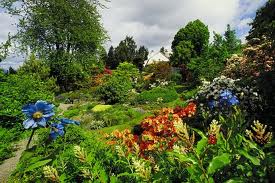
Yay, It's SPRING!  That's when a young man's and young woman's fancy might turn to gardening. It may be their first garden though and unless you spent time with your parents or grandparents tending their beautiful patch of soil you might need some tips about how to make your garden grow.

Choosing the Best Plants for your Garden

Many times we buy plants on impulse then find there is nowhere in the garden that really suits them. Before buying plants carefully examine your garden to see how much sun and shade it gets, whether the soil is well drained or waterlogged and whether your yard is sheltered or windswept. You'll then be equipped to go and buy the best plants for your situation; shade-loving plants for the sheltered areas, sun-lovers for the warm spots, drought-resistant plants for the parched areas which may be either sunny or shaded, and swamp plants for the poorly-drained parts.

But wait! Test your soil first, to determine the pH level of your soil and what kind of nutrients you need to add, if any. Is the soil acidic or alkaline? Most plants prefer soil that is slightly acidic, but there are some that must have alkaline soil to grow.  You can alter the soil's pH level, but it's much easier to simply plant for the soil you have.

Now you are ready to plant. Well - almost. Will you plant in groups or singly? If you buy 'one of everything' your garden may seem rather spotty. Group plantings are organized, harmonious and you can vary the colour for interest.

Before planting out, place your chosen plants around the garden bed in their pots to see how they will look. Re-arrange them until you are satisfied. Grouping plants in sets of threes or fives usually looks better than planting in groups of even numbers. Be sure that you have an interesting combination of colors and textures of plants. Tall plants should go to the back, or the center if your garden will be viewed equally from all sides. Try to keep your plants away from trees. The roots of trees are fiercely competitive and will steal all the nutrients and moisture meant for your flowers.

The right color scheme is one way to maintain the harmony in your garden. Imagine the color of the flowers when they are in bloom. Some colors may clash with others, but can still be planted side-by-side if they have a different blooming season. Foliage color is also important. Many flower plants have silver, grey or purplish foliage that is just as attractive as the flower. This means that they are still attractive well past the blooming season and so have added value.


In Search of the Best Gardening Tools

Different kinds of gardens require different kinds of garden tools. Hardware stores mostly carry a wide range of tools, but there are shops that specialize in the more expensive kind of garden tool that shouts quality.  (I'm thinking Lee Valley Tools - even though my missus says I'm not allowed in there.) Wherever you decide to shop, here are a few pointers to advise you.

Do you have small garden or a large one? A small garden will not require the same large equipment that would be of use in an extensive one. A ride-on mower is unnecessary if you only have a small strip of lawn. Another point to consider is who does most of the gardening? Some tools are too heavy for use by your favourite gal.

When you buy secateurs or pruning shears, make sure the blade always stays sharp to avoid damaging the plant. Look for models that have blades that can be sharpened or replaced, models with tension control and with sizes that best fit your hands. Secateurs usually cost around $50 - $130.

Hedge trimmers or shears are handy - but only if you have a hedge, or plan on growing one.  Some hedge trimmers have curved blades to stop branches from sliding out when cut.

Forks are used for turning and aerating compost and breaking up lumps of soil. The cheaper ones are often not strong enough for heavy soil, so go for sturdiness instead of price. Forks usually range from  $30 - $100. Make sure that the handle feels comfortable in your hands and has good balance. If the handle is too thick it puts extra strain on your hands just trying to hang on. And don't forget to pickup a good fitting pair of leather gloves to keep the blisters at bay.

A shovel has a scoop blade and is best used to move around dirt and garden soil. A spade has a flat blade great for cutting edges, digging and dividing plants. The edge of a spade should be kept sharpened for clean and efficient cutting will cause the least amount of damage to plants. These are a basic garden necessity and usually cost from $30 - $50.

A pruning saw is used for pruning trees and larger shrubs, while secateurs are for plants like roses. Pruning saws have a narrow curved blade that fits between stems or branches and easily and cuts them as you pull the saw backwards. They are approximately $27- $55.

A chipping hoe is a handy tool for getting rid of small weeds. The Dutch or push-hoe is slightly more user-friendly as the action required to use it does not jar the neck and shoulder quite so much.

A rake is also a basic requirement for the garden. The strong rake with the flat head and sharp metal prongs is used for smoothing a garden bed and getting out the last of the bumps and weeds. The plastic rake is used to gather leaves and grass clippings only.

Gardening tools don't have to be expensive. Flea markets and garage sales can be excellent places to pick up great tool bargain. Just make sure you wash the tools down before using them in your yard just in case they are carrying any plant diseases in the dirt.

Come back again soon as we'll be talking about Butterfly Gardening and more garden tips. Enjoy